

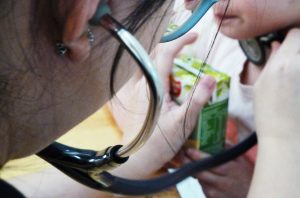
This years’ annual CA workshop will be held at Melbourne University and delivered together with A/Prof Kelly Weir. Please refer to the flyer for full details and the registration link: CA Flyer_FINAL
[gravityform id="1" title="false" description="true"]
This years’ annual CA workshop will be held at Melbourne University and delivered together with A/Prof Kelly Weir. Please refer to the flyer for full details and the registration link: CA Flyer_FINAL
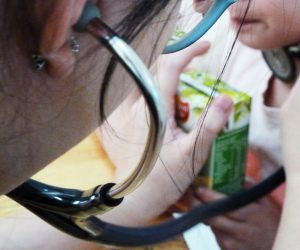
I am excited to announce that this year’s paediatric cervical auscultation workshop will be held at the Stamford Plaza Hotel in Brisbane. Thank you to The Common Good for their support and help with registrations. To enrol in the workshop, please visit: https://www.eventbrite.com.au/e/2025-cervical-auscultation-in-paediatric-dysphagia-tickets-1393503830469
I’m really excited to deliver a 2-day paediatric cervical auscultation workshop in New Zealand – all thanks to Emily Jones & Celia Butler (Speech-Language Pathologists) from Massey University. For further information and registration details, please see this link: Paediatric Cervical Auscultation Workshops 2024 Flyer
I will be co-presenting a Paediatric Cervical Auscultation workshop with A/Prof Kelly Weir in September 2023. For further details, please see the attached flyer WACHS CA Perth WS and registration link at: Speech Pathology Australia – Course Details
I will be co-hosting a Paediatric Cervical Auscultation workshop with Dr Kelly Weir in December 2022. Please see the attached save the date brochure for further information: Cervical Auscultation Workshop Brochure_save the date_final

Did you know that 12% of 4 year olds will stutter, with a majority going on to naturally recover. Factors that may influence a child’s natural recovery from stuttering may include:
We do know that the more severe the stuttering, the longer the treatment time required. Surprisingly, time from when the stuttering first occurs to when a child starts treatment does not predict how long treatment is required for remediation of stuttering. Choosing to intervene or not is a delicate balance of the above risk factors and priorities for each individual child and family.
Jones M, Onslow M, Harrison E & Packman A (2000). Treating stuttering in young children: predicting treatment time in the Lidcombe Program, Journal of Speech, Language and Hearing Research, 43, 1440-1450.
I will be co-hosting a cervical auscultation workshop for speech pathologists in July 2018. Please click on the attached flyer to register: Paediatric Cervical Auscultation Workshop 2018

All toddlers develop their feeding/swallowing skills at their own pace, dependent on their exposure to food types, developmental skill level and preferences for certain textures. At 12 months, toddlers should be enjoying self finger-feeding. Most toddlers will be using their jaw, lips and tongue to eat chewable foods in a co-oordinated manner. Signs your toddler may be having difficulties with their feeding/swallowing skills include: (but not limited to)
If any of the above sounds familiar to you, speak with a speech pathologist for some guidance and ideas to facilitate your toddlers feeding/swallowing skills.
Arvedson, J. and L. Brodsky (2001). Pediatric Swallowing and Feeding Assessment and Management. Canada, Singular Thomson Learning.

9 to 20% of 2 year olds will be late talkers. Some toddlers will naturally resolve and develop age-appropriate speech and language skills on their own. Other toddlers, however, will persist with ongoing delayed speech/language skills without intervention. Some predictive factors for late talkers include:
Zubrick, S. R., Taylor, C. L., & Rice, M. L. (2007). Late Language Emergence at 24 Months: An Epidemiological Study of Prevalence, Predictors, and Covariates. Journal of Speech, Language, and Hearing Research : JSLHR, 50(6), 1562–1592.

Factors which affect language proficiency in bilingual children include:
Assessment by a speech pathologist with knowledge and skills in the area of childhood bilingualism is encouraged if you have any concerns about the development of your child’s bilingual skills.
Kohnert, K (2013). Language disorders in bilingual children and adults, 2nd Ed, Plural Publishing: Melbourne.